‏إظهار الرسائل ذات التسميات SECURITY. إظهار كافة الرسائل

الأحد، 1 مايو 2016

Docoss X1-User Data Not Secure!!


Docoss X1!
It's been In A Subject Since It Launched.
  1. Docoss X1 Is Real Or Fake?
  2. Docoss X1 Is A Scam?

 After Order Placed One More Question Raising
 Are User's Data Secure?

No,Users Data Not Be Secure Because By Trick We Get The All UsersData.


By Changing 6 Digit Request Id U Can easily Access All Users Data.

Proof Is Here:-


الجمعة، 1 يناير 2016

Heimdal PRO


Heimdal PRO

Protects you from cyber-criminal actions by employing an advanced web scanning engine to keep you safe from notorious data and financial stealing malware, such as Zeus Gameover (P2P) and CryptoLocker.


Close Security Holes
Automatically and Silently

Heimdal PRO scans your computer every 2h for outdated software. Heimdal installs updates as soon as they're available. It does so in the background, without interrupting your work. This closes security holes in your system that cyber criminals exploit in 65% of attacks.

Personal Dashboard:
Instant Security Status Overview

Get more control over the threats Heimdal PRO blocks to protect your system. Check the log for software patches applied, infections detected and websites blocked. See detailed activity from the past 7 days in an easy to use dashboard that explains what's going on.

New Software Manager:
Install Apps Directly & Silently

Save time and eliminate the hassle of installing new software. Just go to the Patching System tab, choose the app you need from over 20 options and install it with one click. No need to navigate confusing websites, run shady installers or risk getting infected with malware. Safe, easy and quick!


How To Activate?

  1. Go here: https://heimdalsecurity.com/en/
  2. Click Get It Now
  3. Enter voucher: beta24rwd
  4. Continue to download

ScreenShot:


الثلاثاء، 4 يونيو 2013

16 year old teen breaks down Vine on its debut on Android with a Meme

16 year old web developer Will Smidlein succeeded in bypassing the 6 Sec upload limit set by Vine and managed to upload a 3 and half minute Rick Astley's immortal "Never Gonna Give You Up".  The post was done at the same time as Vine's debut on Android causing a serious heartburn among the Twitter's engineers.  Even as the Vine went viral, Twitter’s engineers started to have troubles with the video that “broke” Vine. An engineer from the micro-blogging website sent a direct message to Smidlien, requesting him to take the video down  
16 year old teen breaks down Vine on its debut on Android with a Meme

Before reading the article, I want you to understand the two words used in the post.  Many of you would probably know them or heard them somewhere but for not so intelligent among us, here goes.

Meme : Wiki lists Meme as "A meme (/ˈmiːm/; meem) is an idea, behavior, or style that spreads from person to person within a culture."  In the tech world it means a article, video or a stub which goes viral within all forms of internet.

Rickrolling : Rickrolling is an Internet meme involving the music video for the 1987 Rick Astley song "Never Gonna Give You Up". The meme is a bait and switch; a person provides a hyperlink which is seemingly relevant to the topic at hand, but actually leads to Astley's video.  So if you are on serious topic and your friend or colleague sends you a inconspicuous link, which you think is related to topic, but leads to the song; you are rickrolled.

Hope you have understood the two terms.  Now back to the topic.  How did 16 year old Smidlein manage to penetrate the busty servers of Twitter and upload a 3 and 1/2 song as against the 6 sec limit.  Well, Smidlein is a Android developer and  just as Vine hit Android, he decompiled the application. He managed to recreate portions of the service’s API that lets users create posts, add titles and attach thumbnail images. Smidlein then downloaded the Rick Astley video and posted it to the app’s servers, creating a never-ending, looped RickRoll. 

What he assumed was a harmless prank, turned into a nightmare for the Twitter engineers.  As a last resort, they had to approach Smidlein to remove the post as it went viral over the webworld.

Smidlein's constant tweets on the issue absolve him of any wrongdoing but the fact remains that this meme will be quite famous for a while. 

Vijay Prabhu

الاثنين، 27 مايو 2013

Facebook messages posted by you made public due to flaw in Android Facebook Pages Manager

Facebook messages posted by you made public due to flaw in Android Facebook Pages Manager
Image courtesy Android Police


Privacy and Facebook seem to be eternal enemies bonded by blood!  In a development yesterday, Android users messages sent to private beneficiaries were seen in Public.  Facebook messages sent by Android users through Facebook Page Manager were seen in Public.  It seems that the App has some kind of flaw causing private messages sent by Page owners using Facebook’s Pages Manager for Android to become public on the very page. 

The Android Police first noticed this flaw and brought it to the notice of Facebook.  At 11.30 pm PT Facebook's Rory informed Android Police that the company is looking into the issue and "will try to get a fix up soon."  

Till the issue is fixed you shouldn't use the Android Facebook Pages Manager to send or receive posts and images.  They may land up in unwanted hands.  Will keep you updated of the Facebook's fix for this very serious flaw.

Vijay Prabhu

الأربعاء، 22 مايو 2013

Using Skype private messaging may not be 'Private' after all; Ars technica discovers possible human intervention

Using Skype private messaging may not be 'Private' after all; Ars technica discovers possible human intervention

If you thought your Skype private messages were 'Private', think again.  In a startling revelation, Ars Technica has found out that the private messages that users send to each other are not so private after all.  Ars Technica made this discovery along with a independent security researcher Ashkan Soltani.

This is how Ars Technica and Soltani did it.  To carry out their tests, they sent four web links using Skype and while two of these were not clicked on, the two others – one beginning in HTTP link and the other HTTPS – were accessed by a machine with the IP address 65.52.100.214 (it belongs to Microsoft). This led them to conclude that the software giant can not only see the plain text as it is sent from one Skype user to another and also that the company regularly monitors these messages.


So if you thought that the Skype just scans through the messages for spam and other unwanted things you may be wrong.  There may be a human element involved in the entire process and this is indeed worrying.   In its privacy policy, Skype clearly states that it may take to automated scanning within instant messages and SMS to fish out spam and links to phishing sites and other fraud. 


But given the above revelation by Ars Technica, take extra care while sending out classified, personal and confidential information to your friends, colleagues, business partners.  


Read the full Ars Technica report here, and comment on this startling revelation.

السبت، 11 مايو 2013

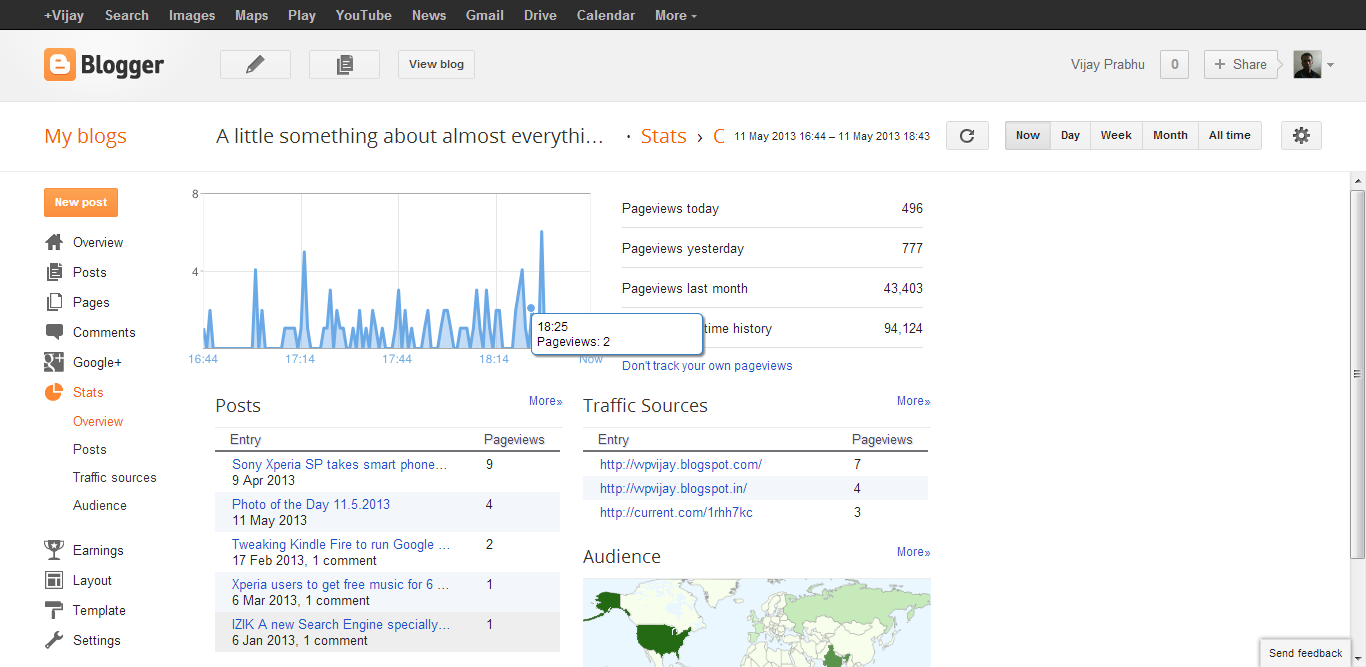
Spammers visiting your blog is common, but do not click on the hyperlink, you encourage them by doing so!

Spammers visiting your blog is common, but do not click on the hyperlink, you encourage them by doing so!

Since I started this blog back in December, 2012 every day I kept my eyes peeled for number of viewers visiting my blog.  Everyday I hoped the page views would be better then yesterday.  It is the ultimate satisfaction for any blogger to see a high volume of page views for his/her blog. May be more than ad revenue!  Because like Aamir said in 3 Idiots, 
Baccha kabil bano, kabil ... kamyabi to sali jhak maar ke peeche bhagegi
Its very simple, write good content, the visitors and readers will flock your blog and with them you will get good revenue.   However it this article is not about readers or visitors to your blog, it is about spammers visiting your blog.  When I started blogging, I was happy to find a website with url videoshub.needz.it visiting my site often.  But one fine day I discovered it had visited my website 59 times in a day, I was worried and clicked on the link.  As you would have guessed by now the site featured unwanted content.  So I googled it and found out a way to stop it, thanks very good blogger friends I have and complained about it in a very decent way with Lunarpages, they raised a ticket about my complaint and resolved it. Since then it has never visited me you can also do the same by visiting Lunarpages support page, if this particular site is troubling you.

But my run-ins with the spammers have never stopped.  Till recently a site called kallery.net visited my site.  When I checked it out, it seemed to be some kind of image gallery in Korean language.  The latest ones doing rounds on my website are filmhill.com and current.com.  The webpage that is hidden under the current.com is flf-course.com which contains some sort of ad.  I was a bit surprised because current.com is a very reputed site. But spammers work in mysterious ways.

I have only one thing to say to my fellow bloggers, never click the hyperlink or url.  Better still stay away from bloggers visitor stats, they are not absolutely correct and also they induce you to click on unwanted hyperlinks.  Please read Proffessor Mungeltons blog and tecnoxp.com for list of all kind of spammers that are found to visit blogs. 

If you want a error free hit counters or hitstats for your blog kindly visit my friend Rehmat's website here for different kinds of stats counters. 

All in all, I would say to my fellow bloggers that these spammers are really parasites who survive on our clicks so if you want to effectively end the menace, stop clicking on them.

Kindly write in your experiences with spammers on your website/blog and share them with fellow bloggers as all of us are affected by them.

Vijay Prabhu


الأربعاء، 1 مايو 2013

Coming soon an Application from McAfee to identify pirated movies, music, programs and ebooks.

Coming soon an Application from McAfee to identify pirated movies, music, programs and ebooks.

McAfee the popular anti-virus maker has filed a patent for a new technology which prevents users from accessing the pirated, illegal content on the web.  McAfee plans to integrate this technology with its widely used SiteAdvisor tool to detect and block illegal content.


If you are hooked to downloading movies and torrents, this technology will not allow you to download the illegal movies and take you to the legal sites were the content is available, like the Amazon.com.  


The McAfee's patent describes the technology as  “preventing (or at least deterring) a user from inadvertently or directly consuming illegal content on the Internet.” MaAfee says tt employs a cloud-based blacklisting mechanism to filter content and detect if the link you just clicked is illegal or not. The system will then warn you of illegal content, block access to webpages, or offer purchasing advice. 

The technology filters the web search results and also the social networks.  So if your friends tell you about the latest movie they enjoyed and where you can download it, the SiteAdvisor will detect it and warn you.

The McAfee has added that the technology could use a cloud-based system for centralised analysis of whatever you click. The system would use data from web crawlers or other blacklists to analyse content on the web and add it to its own blacklist. In short, the system can monitor which URLs you click, send those URLs to a cloud for “analysis”, and depending on how it is set up, show you a warning message, block access, or give you legal alternatives. 

This kind of system already exists with the popular search engine Google giving you a warning about the malicious websites and saying the visiting that particular site will harm your computer.  But as of now it has not been centralized and archived.  The most potential victims of SiteAdvisor will be the torrents, uploading sites and downloaders.  

However for you and me, the users the technology can be a pain but it will be a very good tool for schools, colleges, offices and institutions.  For other security related news visit here!

Vijay Prabhu


الثلاثاء، 26 مارس 2013

Xperia Z now accessible from behind the lock screen after iPhone and S III


The lock screen flaw disease now spreads to Sony Xperia Z and this one is the most easiest of them all.  A Sony user Scott Reed has upload the above video giving a complete tutorial but you dont need one in this case. 

After the Apple's iPhone 5 and Samsung's Galaxy SIII and Note which were made accessible through the flaw in the lock screen, now Xperia Z, the latest phone from Sony stable is diagnosed with the same disease.  All you have to do is to press the emergency phone dialer.  Once the Phone dialer window comes up, press the following USSD command  *#*#7378423#*#* (or Service in simple English) on the phone’s emergency dialer. This USSD command serves to open up a various services menu that lets you view the status of the various sensors in the phone. Just find the NFC settings  and press NFC diagnostic test.  When the phone completes the test, press the home button on the screen's navigation bar and voila! you are into the phone.

Unlike iPhone or Samsung bug this one lets you access pretty much anything from the internal as well as external storage.  The real matter of concern is that Sony released a update fix for bugs on Xperia Z only yesterday for the 'sudden death' issue in the original phone software and somehow this one managed to escape from right under Sony Engineers noses.  This may be a routine lab test button which was left unattended by the engineers but has serious effects like allowing anybody to access your apps, photos, images and posting on your behalf.  

Anyhow now a days it is better to keep all your phones in physical lock and key rather than risk some flaw in it which may allow anybody access to privy information.  I would further suggest you to kindly not save any bank and personal information in form of notes or messages without inbuilt security software.

Do write in you comments on this security flaw.

Vijay Prabhu

السبت، 23 مارس 2013

The ultimate attack : deciphering the South Korean cyber attack on 20.3.2013


The ultimate attack : deciphering the South Korean cyber attack on 20.3.2013

All of you must have read the cyber attack on the South Korean computer network on Wednesday, 20th.  Those who don't know or have not read about the attack, here is a brief summary of the attack.  Three major banks and another three television stations in South Korea were made to go offline simultaneously at 2 pm Seoul Standard Time.  The South Korean Government later confirmed that malware was used to bring the networks down.  The sheer ferocity of the attack brings out many questions.  Is a malware inspite of its viciousness capable of bringing such huge networks down.  Lets understand its working so as to know how it took down the networks


Three major banks and TV stations had to shut down their systems in view of a cyber attack.  While some of the banks reopened there websites within matter of hours, one of the largest tv networks of South Korea, KBS is still down with following message :


KBS World Radio

We extend our sincere apology for the inconvenience caused by the sudden stoppage of the KBS website service. We are currently making our best efforts to normalize the service as soon as possible. We ask you for your patience and understanding. We will do our utmost to provide a more stable service in the near future. Thank you very much.

The sheer ferocity of the attack has bewildered many, hackers and security analysts alike.  Earlier the South Korean Government blamed North Korea of perpetrating the attack but later it was deemed as a malware attack.  Now the news has filtered in that the malware that has been identified is not capable for causing such a huge attack without a very active co-ordination between hackers and with several malwares instead of one.  The latest update from South Korean Government points out that the attack has been pinpointed to a Chinese IP address but efforts are still on to identify the attackers.

The primary malware has been identified as the “wiper”, a strain of Windows trojan which first surfaced a year ago.  This malware or a similar version of it called Shamoon attacked the energy companies of Middle East last year.  However Director of Operations for Symantec Security Response Liam O'Murchu said that the malware, which his company identifies as Trojan.Jokra, has nothing remarkable about it. "Nothing stands out about it," he said.  The execution part or "dropper" portion of the attack, effectively how wiper was used to install in the networks is still being investigated.  Nobody seems to know how or what carried the wiper aboard it.

The malware first kills the execution files of antivirus and security software then starts overwriting the Master Boot Record of the computer.  It replicates the same procedure on any other drives and mapped drives that are available.  When this is done it attempts to overwrite the MBR of unmapped drives forcing the a shutdown of the computer.  This is done through execution of the shut down command line.  Once the machine is re-booted it is unusable till the time it is formatted or restored back to its original pre malware time.

What surprising is that this malware used sophisticated time execution system.  That is ising a clock call API to check the time and execute the code at the wanted time in this case  2pm on March 20 to trigger.  This looks like a controlled detonation of code.

How did it infect the Linux and Unix machines.  The wiper installed a trojan called Trojan.Jokra on these machines and used a script called mRemote.  Once the mRemote is hacked it finds the SSH connections of Linux machines and executed the batch commands for drive wipe on on Linux, Solaris, AIS, or HP-UX. On Linux, the commands delete the /kernel, /usr, /etc, and /home directories.

The malware is not as complex as other malwares available in the wild yet it was able to take down many of the networks in South Korea.  This is more frightening especially that South Korea is in a war like situation with is neighbour.  

Please write in your comments on the article.

Vijay Prabhu

الثلاثاء، 12 مارس 2013

Your Facebook 'Likes' reveal more than what you think

Your Facebook 'Likes' reveal more than what you think
Remember my earlier blog in which I had asked if Facebook users were trusting too much.  If you thought that you liked your friends new hairstyle or your new phone, you did be surprised how much you like can really reveal.  A study by researchers at University of Cambridge has predicted the personality, sexual orientation, age, race, IQ, political views and many other things based on 'Likes' alone.  The researchers used a model of 58000 Facebook users to conduct the research.

Facebook users all over the world beware, you may not know it but you 'Like' may reveal more that you think.  It may not only reveal your buying or shopping habits but also many things you may not like to tell other.  The University of Cambridge has released a study of 58000 US based Facebook users and they accurately pinned down the many very very personal details of Facebook users.  The study was conducted from a period 2007 to 2012 and it revealed the age, race, IQ, sexuality, political views of the users studied.

The most astonishing fact was that the study was conducted only on basis of the 'Likes' listed by the users which included photos, your friends recent updated, products, sports, musicians, books, restaurants and websites.  The study further said that, "Likes represent a very generic class of digital records, similar to Web search queries, Web browsing histories, and credit card purchases,".  The participants, users of Facebook based in US had given researchers access to their Facebook page and their 'Likes' were fed into specific algorithms.  The researchers than created a model based on the statistics which predicted the very personal and private details.  The results were than corroborated with the information from the profile and the personality tests.  

Mr.Michal Kosinski, the lead researcher of the team said that "Each person, on average, liked 170 things, "Some liked only one thing and there were people who liked thousands of things. We removed those. We looked at people who liked between one and 700 different things."


Why the research was conducted is not known, but the varying degree with which the study was successful in pin pointing has alarmed many people.  The simple 'Like' you may have posted to get some discount or special offer from a product may actually tell people what you really are.  Facebook spokesman Fred Wolens has said that the  predictions are "hardly surprising."

The implications of the study may escape many of you who are Facebook users but it can gravely violate your privacy if such kind of information is sought and compiled by some unwanted and anti social group or person.

So next time you post a 'Like' beware.  The Facebook is already reeling under the loss of users in the teenage band for first time since its launch and any more news especially the disturbing kind can shake its credibility amongst the users who are hardly safe in the digital age.

Do post in your comments about this article and express your views.  You can also add me to your circle by clicking here. 

Vijay Prabhu